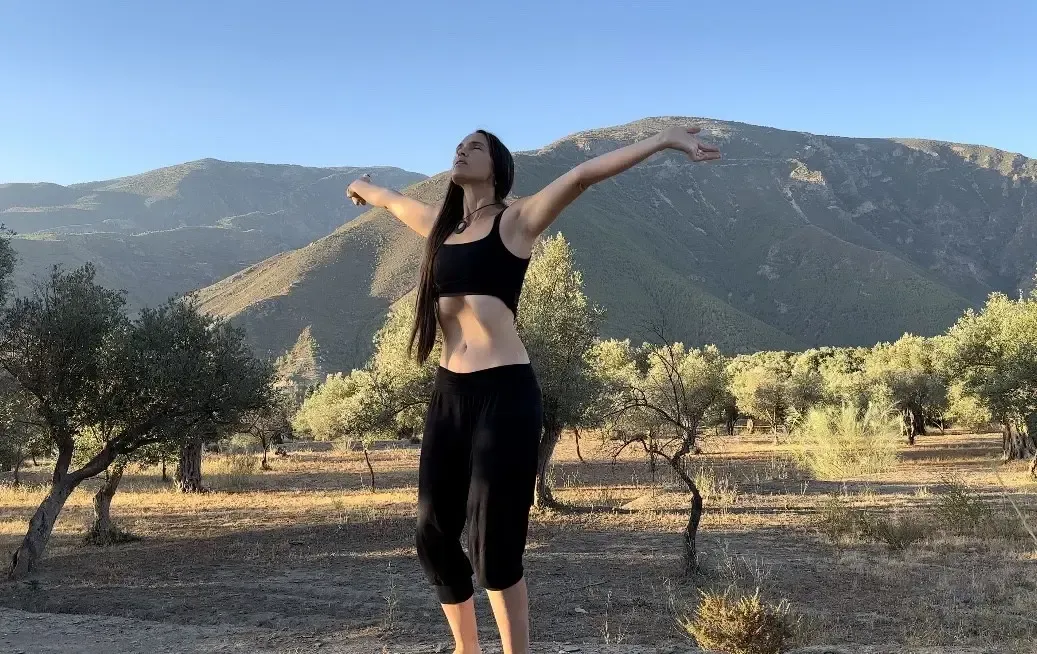
3 core ways that posture and breath can influence your healing journey
“Our bodies change our minds and our minds change our behaviour and our behaviour can change our outcomes” — Amy Cuddy
Have you ever noticed a feeling of your body collapsing forward either in defense or protection?
Can you see how this may be related to the way you feel?
2014 was what I call the “year of the cross” for me — I basically allowed myself (through relational circumstance) to be deleted, isolated, cut off from all that I had known to be normal life for me. It was HARD to say the least. Hard for me, hard for my family and very confusing for my friends.
I had gone from being an active member of the community involved in the children’s school projects, teaching classes, seeing clients in my herbal practice, performing fire shows at parties and generally being a lively person… to NOTHING. I didn’t even go grocery shopping in my own town. And I started smoking to cope! Something I had not done since I was 17!!
Ok, I think you get the picture!
In late 2014 I finally started to emerge… I began exercising again. I attended an aerial silks class in a city nearby…but my back started hurting and tickling in that familiar place, about half way down. Sometimes more painful, sometimes like I had an annoying bra strap label itching me.
The teacher suggested that it may have something to do with my diaphragm so as soon as I returned home I searched “how to relax the diaphragm” and woooaahh… not only did I find the amazing answer of Low Pressure Fitness (LPF for short) but also I read so much about how stress and trauma can cause tension in the diaphragm… which explained the fact that I had experienced these middle back sensations ever since my teens!
So, I found someone in a town about 40 minutes drive away that could teach me the basics.
As I started to practice at home, as well as feeling the physical benefits (more abdominal tone and less back pain) …
…I noticed myself becoming more alive… like I was waking up and feeling more refreshed.
I decided I wanted to learn more and found that there was a 3 part training program coming up just a few hours away. This was early 2015.
Each time I went to the weekends of training I felt like I came back a different person… the energy of the people, the focus, the breathing, the feeling of balance and strength, the vast amount of new knowledge and inspiration… the reminder of how amazing our bodies are.
Arriving home, I came to the stark realisation of how I had been allowing myself to live.
A few months later I managed to get out, my 3 year old and 8 year old in tow. I continued to practice and began to share the exercise routine. You can catch an early video of a basic LPF routine here (apologies for audio quality).
Over the years, it has become one of my favourite things to share… basically, because the practice helps to make you feel so good all round. It is very uplifting and leaves you feeling positive and ready for the day.
WHY ATTENTION TO OUR POSTURE IS SO POWERFUL
Our posture can influence our emotions and vice versa.
Exploring and improving posture through mindful awareness and exercises like LPF can contribute to a more empowered and confident emotional state. And this is exactly what I have already described about my own personal experience when finding this technique.
Practicing LPF has SO SO many benefits from energy production to pelvic floor health to feeling good about how you look — all of which have a positive impact on our sanity!
But in this piece…
I would like to bring close attention to three core ways in which these postural breathwork practices can influence your healing journey:
1. Nervous system balance and vagal tone
When you breathe out slowly, you activate the ventral vagal branch of your parasympathetic nervous system (the part that makes you feel good).
When you breathe in slowly you activate your sympathetic nervous system!
Try it and see for yourself — more focus on a slow outbreath and you feel more relaxed… More focus on a slow inbreath and you feel more… well… focused.. or alert. Right?
Although the sympathetic part of your nervous system is the one you may associate with ‘fight or flight’ and increase of the ‘bad’ hormone known as cortisol, neither the sympathetic nervous system nor cortisol are inherently bad. They both have very important functions in your body. For example both of these are involved in the fact that you get up and get active each day!
Increasing the flexibility and expansion of your rib cage as we achieve through LPF practice provides extra stimulation to this ventral vagal branch.
Mindful awareness of our posture can potentially influence our nervous system’s response and contribute to a sense of well-being and connection with others, this being the base of Harvard’s Dr Amy Cuddy’s work around Power Posing.
When the body is in proper alignment, it signals safety to the nervous system. This can activate the ventral vagus nerve and contribute to a state of calm and well-being, reducing stress and promoting a sense of safety.
In the other direction, when the ventral component of our vagus nerve is active, we are more likely to naturally exhibit good posture and engage positively in social interactions.
In effect, we can use deep breathing postural alignment and breath holds together to create a healthy balance between the two sides of your autonomic nervous system, which will contribute to you feeling more at ease with social engagement, more capacity for regulating your emotions and more readiness to face those difficult feelings that may be coming up in therapy.
2. Releasing trauma from the fascia
Your fascia is a complex network of connective tissue that surrounds and supports muscles, organs, and other structures throughout your body. It plays a crucial role in maintaining structural integrity, transmitting forces, and providing a communication network within your body.
And, just like all of the other tissues and organ structures in your body, it can become stuck and congested!
The body’s response to stress or trauma, whether physical, emotional, or psychological, often involves a “fight or flight” reaction, which can result in muscle contraction and altered fascial tone.
Fascia has been proposed to have a form of memory and can retain the physical and emotional imprints of traumatic experiences.
Unresolved trauma can lead to stored emotional energy and physical tension and even inflammation within the fascial layers which may contribute to persistent discomfort and pain long after the initial trauma has passed. This means that your fascia can become tight and rigid in places, holding that tension and emotional energy. Over time, this tension can contribute to restricted movement, discomfort, and pain.
Releasing the fascia is a practice that is used by many osteopaths and cranial therapists to bring about healing. You may also help your fascia to get unstuck by actively stretching it or using a foam roller.
However, the action of holding specific postures combined with deep breathing and abdominal vacuums, as practiced in LPF stretches the fascia of the abdomen, pelvic floor, extremities and spine in ways that are not achieved with traditional stretches.
I liken the practice of LPF to being the closest thing to having your body pulled in all directions, allowing space for blood flow, energy flow and alignment.
LPF also brings circulation and lymph to and from the fascia, helping to reduce inflammation and improve the tissue quality and integrity of the fascia. It can address the physiological effects of trauma on the fascia and support release of stored energy.
Just like modalities such as massage therapy, osteopathy, craniosacral therapy, and yoga can address trauma-related fascial changes and promote relaxation and healing; the myofascial stretching and postural exercises in LPF can help release muscle tension, release emotion and improve overall body alignment.
You may notice, like many of my clients, that at the beginning of practicing LPF you may feel emotions moving as the energy starts to be released from your fascia.
3. Enhancing Proprioception
Proprioception is your body’s ability to sense its position, movement, and orientation in space. It involves sensory receptors called proprioceptors in your muscles, tendons, joints, and other tissues.
Through proprioception you get your sense of body awareness which in turn allows you to control your movements and maintain balance.
Trauma can disrupt proprioceptive signals, leading to a feeling of disconnection or dissociation from your body, your posture and surroundings. Trauma can also impact posture by causing muscular tension, imbalances, and altered movement patterns that can eventually contribute to physical discomfort too.
Conversely, engaging in activities that promote proprioception, such as LPF, yoga, or somatic experiencing, can help you to reconnect with your body and promote a sense of grounding and presence. This in turn can allow you to feel more capable and at ease as you process your past.
As you may have come to understand by reading this, LPF involves a focus on body awareness, posture, and movement.
This heightened awareness can contribute to a stronger mind-body connection, allowing you to better regulate your responses to stressors and emotions.
As always it is important to note that responses to all types of bodywork may vary.
While LPF can have positive effects on the nervous system, fascia and proprioception, it’s just one component of a holistic approach to well-being. You may be advised to avoid practicing the full routines if you have high blood pressure or are pregnant.
If you’re considering incorporating LPF into your routine, it’s advisable to consult with a qualified instructor or healthcare professional, especially if you have any pre-existing medical conditions.
Me for example! ;-)
